Canned and fresh green beans: pantry uses & substitutions
Canned green beans are softer and already cooked. Fresh beans need trimming and cooking; frozen beans should follow their packet directions.
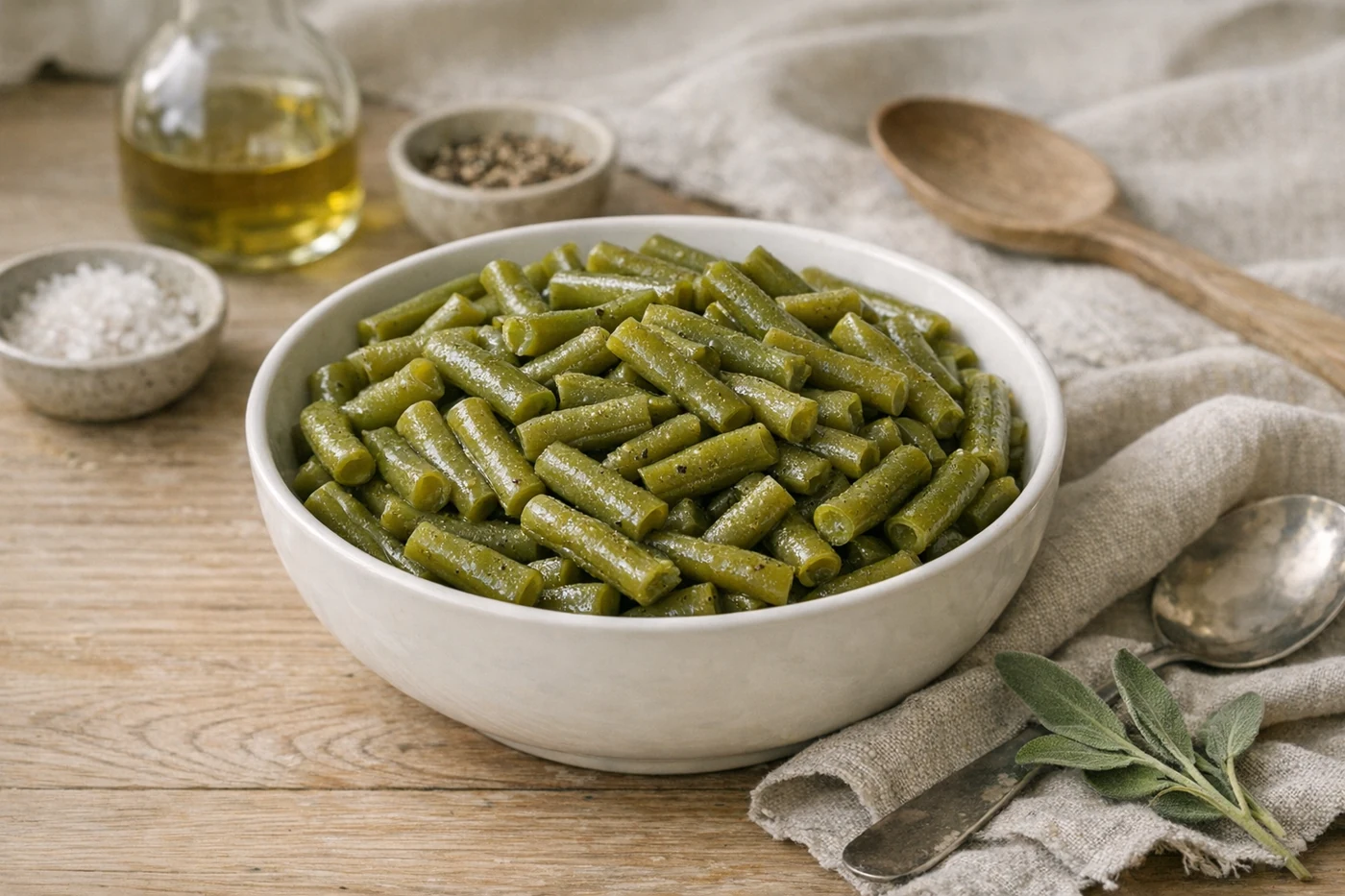
Put it to use
Add canned beans near the end rather than using the full fresh-bean simmer time.
| Kitchen question | Practical approach |
|---|---|
| Easy pairing | Green beans + onion + potatoes |
| Choosing a can | Compare drained weight, ingredients, salt and added sugar on the actual label. |
| After opening | Transfer extra food to a suitable covered container and refrigerate promptly. |
| Damaged packaging | Do not use bulging, leaking or badly damaged cans. |
Canned, fresh or frozen: choose for the texture you need
Canned green beans are a quick option when you want a soft vegetable for a soup, a warm side or a mixed dish. They will not turn crisp again. Choose fresh beans when the recipe depends on a firmer bite; frozen beans are another option, but follow their packet's cooking directions rather than treating them as ready to eat.
| What you have | Best starting point | What to change |
|---|---|---|
| Canned cut beans | Soft sides, soups and quick mixed dishes | Drain as the recipe directs; add late enough to avoid unnecessary extra softening. |
| Canned French-style beans | Dishes where fine strips suit the texture | Fold gently; fine strips break up more readily than larger cuts. |
| Fresh beans | A firmer side or a recipe built around fresh vegetables | Trim and cook using the recipe's fresh-bean method. Do not use the brief warming step intended for canned beans. |
| Frozen beans | A convenient alternative when their cut suits the recipe | Follow the packet's cooking directions and account for any released water. |
This is a preparation guide, not a promise that every version works in every recipe. For a casserole or other dish with a measured sauce, check both the amount of beans and the liquid before making a swap. Green beans are not an interchangeable replacement for chickpeas or kidney beans; those belong in our cooked-bean pantry guide.
Use drained weight, not the number of cans
A can's net weight includes its packing liquid. If the recipe specifies drained beans, compare its required amount with the drained weight on your actual label, or drain and weigh the beans yourself. Do not assume a small cup, a pouch and a large can contain the same amount of vegetables.
A label-reading example, not a current product claim: if a recipe needs 300 g of drained beans and your can supplies 150 g drained, you need two cans. If it supplies 200 g, one can is not enough; measure 100 g from a second and plan how to use the remainder. Use the same units on both sides of the calculation.
Compare salt and other ingredients on the current label. Season after tasting the prepared dish, especially when adding stock or a salty sauce. Drain or rinse when the recipe calls for it; do not add an entire can of liquid to a recipe written for drained vegetables.
After opening: give the remainder a date and a meal
USDA's shelf-stable food chart lists 3–4 days in the refrigerator for opened low-acid canned foods, including beans. Refrigerate promptly at 40°F (4°C) or below and follow any shorter storage instruction on the product. This is not permission to keep food that has been left warm or otherwise mishandled.
- Put unused beans in a suitable covered container and mark the opening date. USDA says the opened can can be refrigerated, but a glass or plastic storage container preserves quality and flavor better.
- Choose the next use now: a smaller vegetable side, a soup or the linked recipe below. Add that meal to your weekly dinner plan.
- For cooked dishes, divide large amounts into shallow containers and refrigerate promptly. FDA's limit for perishables at room temperature is two hours, or one hour above 90°F (32°C); these are limits, not suggested waiting times.
- If you will not use the remainder within its safe refrigerated window, freeze a suitable portion promptly in freezer-safe packaging. Expect softer beans afterward. Freezing does not rescue food that was unsafe before freezing.
Keep the freezer at 0°F (−18°C). For cooked leftovers, use USDA's cooling and reheating guidance below; reheat leftovers to 165°F (74°C), checking with a food thermometer. Do not use smell or a small taste as proof that food is safe.
Check the can before opening
Do not use bulging, leaking, deeply dented or badly rusted cans. Do not taste suspicious contents to decide whether to keep them. These notes concern commercially canned beans; they are not home-canning instructions.
Handling references
- USDA: shelf-stable food safety and the opened-can storage chart
- FDA: refrigeration temperatures, time limits and damaged packaging
- USDA: cooling, storing and reheating leftovers
Sources checked November 5, 2026. Preparation suggestions are practical guidance, not a newly tested recipe.
Browse all pantry ingredients and substitutions for related ingredients.
A recipe to start with
Southern-style green beans. Adjust the ingredient preparation as explained above.
Store opened food following the manufacturer’s directions. For cooked dishes, see our storage guides.
Updated November 5, 2026 · Practical guidance